Nkechi Ebubedike, Cloud Collage VI (detail), featured in AGNI 104
Notes from the Sphere: A Series
Introduction, with the essays in this ongoing series linked below.
It might sound dramatic to claim literary translation as an existential imperative. I might lose you if I were to assert that an intellectually if not also spiritually vibrant, verdant humanity depends on it (at least in part). But maybe the claim doesn’t sound so outer-space when considered in context of the ethnosphere, a concept I first encountered in the work of anthropologist Wade Davis.
In The Wayfinders: Why Ancient Wisdom Matters in the Modern World, Davis describes the ethnosphere as “the sum total of all thoughts and intuitions, myths and beliefs, ideas and inspirations brought into being by the human imagination since the dawn of consciousness.” This web of sociality, Davis offers, “is the product of our dreams, the embodiment of our hopes, the symbol of all we are and all that we, as a wildly imaginative and astonishingly adaptive species, have created.” In short, “[t]he ethnosphere is humanity’s greatest legacy.”
A cultural phenomenon, the ethnosphere has as its fraternal twin the biosphere—the interconnectedness of all biological life on Earth. It is widely accepted that biodiversity is not only an indicator of a robust ecosystem, but a prerequisite for one. Simply put, the less biodiversity on this planet, the worse our chance of survival as a species.
There is reason to be distraught about the outlook. The rate of environmental degradation and species loss right now is staggering. Researchers recently concluded that human activity has resulted in the destabilization of planetary-scale systems to the point that “Earth is now well outside of the safe operating space for humanity.”
We Homo sapiens are getting nervous. One need only look at recent headlines from The Wall Street Journal, The New Yorker, The Guardian, and National Geographic: “The Rise of Luxury Doomsday Prepping,” “Real-Estate Shopping for the Apocalypse,” “‘All of his guns will do nothing for him’: lefty preppers are taking a different approach to doomsday,” and “Do doomsday ‘preppers’ have a point?” This anxiety reflects not only our worry about a physical environment in jeopardy, but a cultural one as well. The comparison brings one of Davis’s most startling revelations: “[T]he most apocalyptic scenario in the realm of biological diversity . . . scarcely approaches what we know to be the most optimistic scenario in the realm of cultural diversity.”
Using language loss as a harbinger of cultural death, Davis tells us that only half of the 7,000 languages now spoken throughout the world are being taught to children. Language—as the technology that binds us, as the technology of our ancestors and of our children and their descendants, as the mode through which we have transmitted the knowledge, sensitivities, and realizations that have kept us alive for millennia—is experiencing its own extinction. “What this really means,” warns Davis, “is that within a generation or two, we will be witnessing the loss of fully half of humanity’s social, cultural, and intellectual legacy. This is the hidden backdrop of our age.”
Another aspect of this backdrop is not so hidden. Languages worldwide are being cannibalized by English. Not only that; English is suffering a dangerous erosion of expressive precision. Orwell’s essay “Politics and the English Language” is as relevant today as it was in 1946 (“The word Fascism has now no meaning except in so far as it signifies ‘something not desirable’.”). Political, social, and cultural chaos is directly proportional to the degradation of the words that we use as a political, social, and cultural species. That the dominant language throughout the world is English puts special responsibility on speakers of English (and publishers of English-language arts) to guard against its “consciously dishonest” use (Orwell) and to treat with great respect other languages that, through translation, can show us new ways of thinking, feeling, and relating.
AGNI has long held literary translation in high regard as an art form. We respect the power of translators to amplify the cultural and imaginative forces of other times, places, and traditions and, in doing so, reveal the multiplicities within our own. Carrying this tradition forward, it’s my pleasure and honor to introduce Notes from the Sphere, a new recurring online feature that makes translation more visible not only as a creative and critical practice, but also as a social practice of engaged inquiry.
Here translators whose work has appeared in the journal can reflect on anything from intellectual to aesthetic to ethical questions raised by the works they’ve translated. We anticipate that these companion pieces might be meditations on encounter; difficulty; “fidelity”; failure; the cultural, political, historical, and formal pressures that shaped the translation; or any aspect of craft—but we do not wish to circumscribe their scope. The larger point is to show the process of translation and the reading of translations “as something like moving through the world,” to borrow from Damion Searls in The Philosophy of Translation—“a rich and fascinating practice that sheds light on many facets of art and the human condition.” A practice of reciprocity, I would add. We hope this series will deepen readers’ engagement with translated works. Through that engagement, many worlds are possible.
Notes from the Sphere
Urdu, Khalida Hussain, and Me by Farah Ali
Translating Two Sonnets from Mercè Rodoreda’s World of Ulysses by Rebecca Simpson
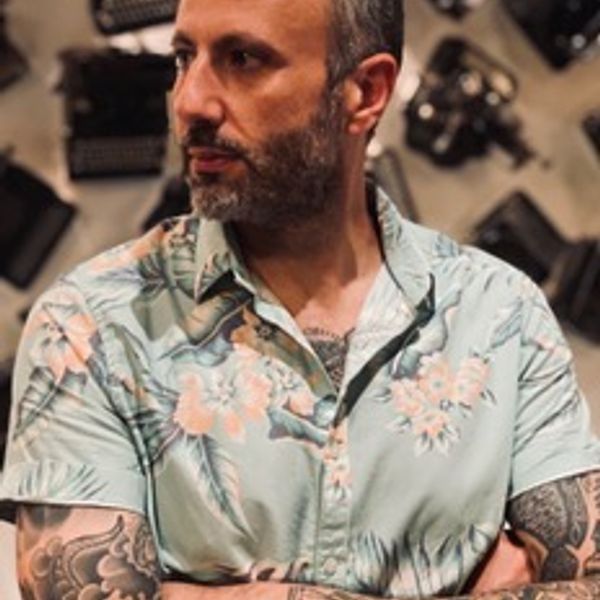
Issam Zineh
Issam Zineh is assistant poetry editor of AGNI and has been on the editorial team since 2024. He is the author of Unceded Land (Trio House Press, 2022; the87press [UK], 2026), a Trio House Press Editors’ Selection and finalist for the Housatonic Book Award and Balcones Prize for Poetry. A public health care worker, he lives on Paskestikweya land. Visit him at www.issamzineh.com. (updated 9/2026)
Read Zineh’s entry in AGNI’s “In Discussion: AGNI 95 Reviews AGNI 95”
Read Jacques J. Rancourt’s review of Zineh’s “N. Oxford Avenue” in the folio “AGNI 95 Reviews AGNI 95”
Zineh edits the ongoing series Notes from the Sphere.